Called to Care: Strengthening Faith and Behavioural Health for Recovery in the USA
Andrea Clements. Edited by Claire Carter
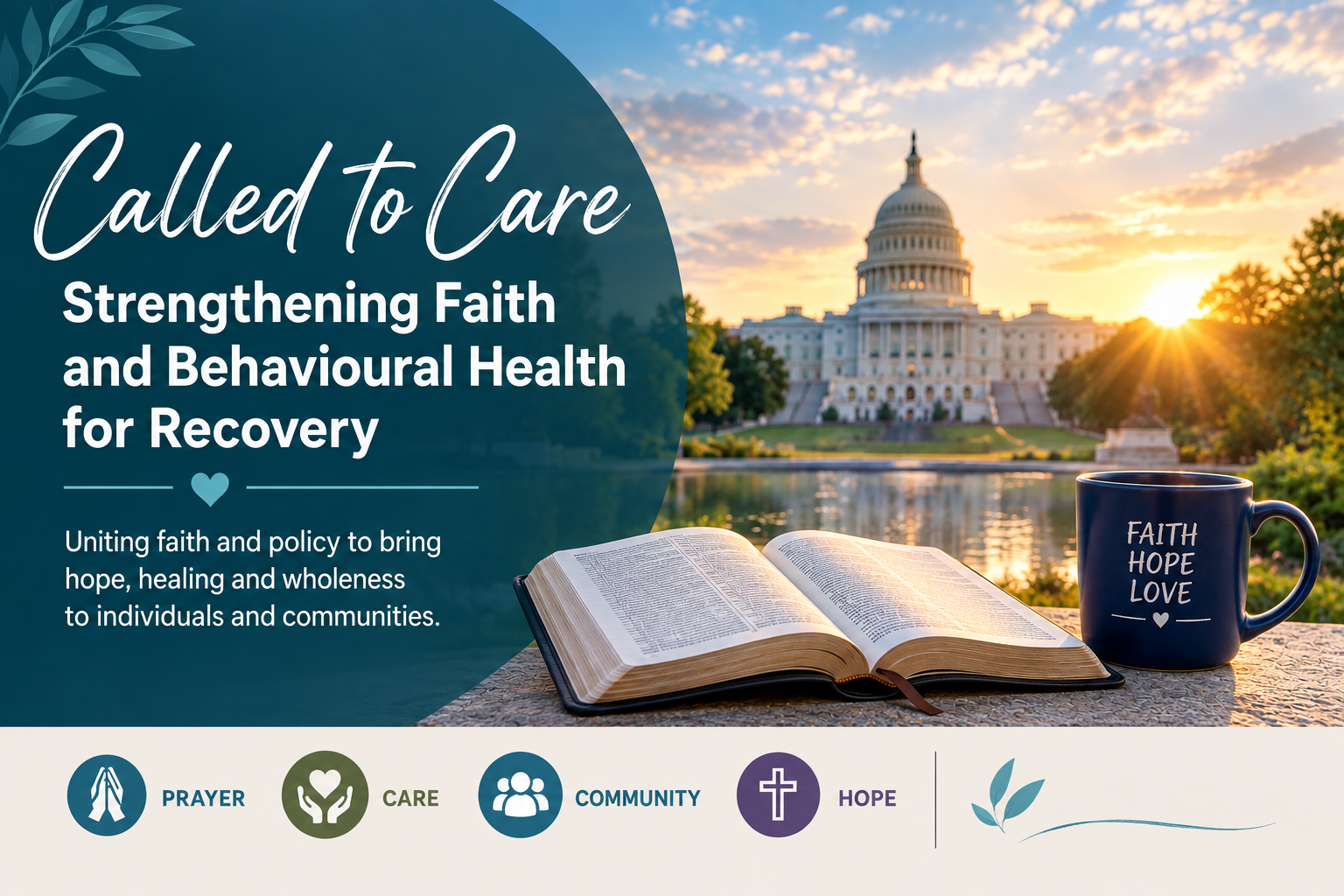
In July, Andrea Clements, an ISAAC member was invited to Washington, D.C., to take part in an important conversation about the role of faith communities in responding to addiction and behavioural health.
The invitation came on behalf of the Substance Abuse and Mental Health Services Administration (SAMHSA), the U.S. Department of Health and Human Services (HHS) Centre for Faith, and the Administration for Children and Families (ACF). The two-day gathering, “Called to Care – Strengthening Faith and Behavioral Health as Social Infrastructure for Recovery,” brought together faith leaders, government representatives, researchers and practitioners to explore how faith communities can play a greater role in supporting recovery.
The invitation included an opportunity to contribute as a panel speaker on “Engaging Wholistic Care: Emerging Models of Care that Engage Everyone.”
Giving the Church a Voice
The panel was deliberately broad, giving speakers an opportunity to address what they felt was most important.
One of the key issues raised was the difficulty many grassroots churches and faith-based organisations face when attempting to access government funding. Current funding structures can make it extremely difficult for smaller organisations to participate, particularly when grants require applicants to provide a wide range of services or have significant organisational capacity.
Another important point was the need for Christian organisations to be able to genuinely operate from their Christian identity.
For faith communities, prayer, worship, talking openly about sin, forgiveness and the transforming power of God are not additional activities—they are central to the way they understand recovery and wholeness.
The Christian faith also offers something unique to the response to addiction: a command and an empowerment from God to love people, walk alongside them and welcome them into community.
One practical example shared was the work of Uplift Appalachia, where church volunteers are equipped to provide transport for people in recovery. What might initially look like a simple lift can become something much more significant—a relationship, an opportunity to speak into someone’s life and a pathway into a healthy, supportive community.
Ultimately, it can also provide an opportunity for someone to encounter the love of God and discover a relationship with their Creator.
Are We Listening to the Faith Community?
One of the encouraging reflections from the meeting was that there are people within government who genuinely want to involve faith communities in addressing addiction.
However, there can be a significant gap between wanting to involve the faith community and understanding what meaningful involvement actually looks like.
For example, while government representatives are offering assistance with writing grant applications, this does not necessarily address the underlying barriers that prevent many churches and grassroots ministries from applying in the first place.
Many grants are simply too comprehensive, requiring organisations to deliver a large number of services or meet requirements beyond the capacity of smaller faith-based groups. Other funding opportunities require a city, county or state government to apply on behalf of organisations.
Although funding may subsequently be used for faith-based projects, many churches do not have the influence or relationships necessary to persuade their local government to apply for that funding on their behalf.
These challenges were raised repeatedly during the Washington meeting, giving hope that the concerns of grassroots faith organisations are beginning to be heard.
There is still a long way to go.
An interesting discovery following the meeting was that the HHS Center for Faith is not always involved in decisions about how policies and funding documents are developed. This suggests that an important first step may be ensuring that those responsible for making funding decisions are listening to their own faith representatives.
A Conversation That Could Lead Somewhere
The meeting was recorded, and a white paper is expected to be produced for SAMHSA, outlining key highlights, recommendations and conclusions from the gathering.
There is understandable hope that this document will not simply sit on a shelf, but that the recommendations will be read, considered and acted upon.
There is also a recognition that meaningful change may take time.
Following the meeting, conversations have already begun about developing a policy paper for publication in a health policy journal. Such a paper could explore the barriers faced by faith communities and offer practical recommendations for creating funding and policy structures that enable churches and Christian organisations to contribute more effectively.
This could be an important opportunity to ensure that the conversation continues beyond the two days in Washington.
Please Pray
At ISAAC, we believe that the Church has a vital role to play in responding to addiction. Across the world, Christian organisations and churches are already walking alongside people and families affected by addiction, offering practical support, community, hope and the message of Jesus.
Please pray for those who represented the faith community at the Called to Care meeting—that they would continue to represent Christian faith and practice with wisdom, courage and humility.
Pray that those making decisions about addiction policy and funding would genuinely listen to the experiences and expertise of faith communities.
And pray that this gathering would be more than simply an opportunity for the faith community to feel heard. Pray that it would become a first step towards meaningful change—opening doors for Christian organisations to contribute, receive appropriate funding and, most importantly, freely live out the faith that motivates their work.
There are many people affected by addiction who need hope, belonging, restoration and a new way of life. May the Church be equipped and enabled to play its part in bringing that hope to those who need it most.