My Identity in Christ: My Self-Image
Viljam Borissenko. Edited by Claire Carter
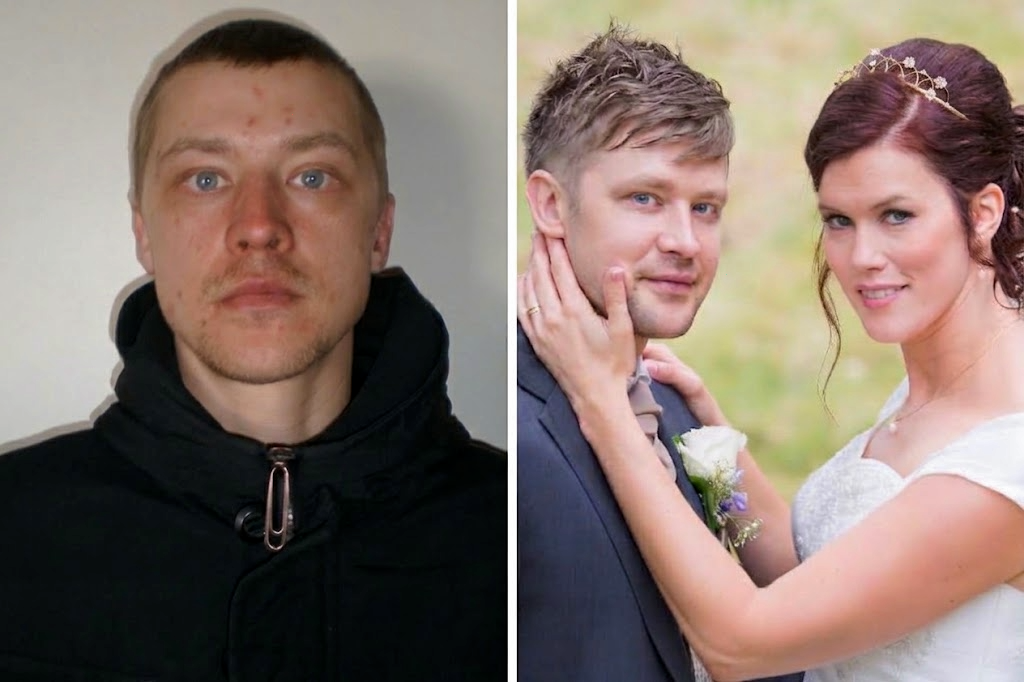
Vjatcheslav: drug dealer 2002-2003, entered residential rehab 2010.
Now happily married to Emmelie, they have two children and joyfully serve the Lord.
“It is a blessings to be a living testimony of His grace“
9 If you declare with your mouth, “Jesus is Lord,” and believe in your heart that God raised him from the dead, you will be saved.If you confess with your mouth that Jesus is Lord and believe in your heart that God raised him from the dead, you will be saved. – Romans 10:9
What shapes our self-image? What shapes our identity?
For many of us, the words and definitions that have been spoken over us can have a profound effect on how we see ourselves. Sometimes words spoken years ago can continue to speak into our lives long after the person who said them has forgotten them.
I know this from personal experience. A speech condition called rhotacism affected me deeply and required me to see speech therapists. I was made to feel like a laughing stock. I became conscious of certain words and would avoid saying them because I was afraid of getting them wrong.
Those experiences can leave us asking: Who am I really?
Is my identity found in what I do? In my talents? In the position I hold? In how many people attend my church or the ministry I lead? Is it found in how successful I am, or in what I have achieved?
Of course not.
It is so easy, particularly in ministry, to measure ourselves by what we can see. How many people have come? How much have we achieved? Is the ministry growing? Are things going well?
But our identity isn’t found in our activity.
It is found in Christ.
Recently, God has been showing me more about what it means to understand my identity in Him. He has been challenging me to look beyond what I am doing and to remember who I am because of who He is.
Matthew 16: 13-18 13 When Jesus came to the region of Caesarea Philippi, he asked his disciples, “Who do people say the Son of Man is?” 14 They replied, “Some say John the Baptist; others say Elijah; and still others, Jeremiah or one of the prophets.” 15 “But what about you?” he asked. “Who do you say I am?” 16 Simon Peter answered, “You are the Messiah, the Son of the living God.” 17 Jesus replied, “Blessed are you, Simon son of Jonah, for this was not revealed to you by flesh and blood, but by my Father in heaven. 18 And I tell you that you are Peter,[a] and on this rock I will build my church, and the gates of Hades[b] will not overcome it.
“Who do people say the Son of Man is?”
They give Him various answers. Then Jesus asks the more personal question:
“But what about you? Who do you say I am?”
Peter answers, “You are the Messiah, the Son of the living God.”
That declaration changed everything.
Jesus then speaks into Peter’s life and gives him a new identity. Peter had been known as Simon, but Jesus calls him Peter. He gives him purpose and calls him to be part of building His Church.
Peter wasn’t perfect. He would later deny Jesus three times. Yet his failure didn’t cancel God’s purpose for his life. Jesus restored him, forgave him and continued to work through him.
What made the difference?
Not Peter’s perfection.
It was Christ.
This is why Romans 10:9 is so important. The foundation isn’t simply what Jesus says about me; the foundation is who I say Jesus is.
Jesus, You are my Saviour.
You are the Messiah.
You are the Son of the living God.
You are Lord.
When we understand that, everything else begins to fall into place.
For those of us working with people affected by addiction, this is incredibly important. We can encourage people by reminding them of what Jesus says about them: that they are created in the image of God, loved, valuable, forgiven and bought at a great price. There is life and hope available in Christ.
But ultimately, the most important question we can help someone answer is not simply, “Who am I?”
It is: “Who is Jesus?”
Because when we see who Jesus is, we begin to understand who we are in relation to Him.
I have also been challenged to remember that it is not my job to change someone’s heart. I can teach Scripture. I can encourage. I can walk alongside someone. I can share my experience and point people towards Jesus.
But only God can change a person’s heart.
That takes the pressure off.
It means I don’t have to measure my worth by the results I see.
Sometimes ministry is going well. We can see people responding, lives changing and multiplication happening. At other times, things can feel dry. Those are often the moments when we are most tempted to question ourselves.
Am I doing enough?
Am I getting it right?
Why aren’t I seeing more?
But perhaps those are the very moments when God reminds us again: It’s not about what you are doing. Remember who you are, and remember who I am.
There is also a connection here with the Great Commission. Jesus calls us to go and make disciples, to take the gospel to the ends of the earth.
But how can we confidently proclaim Christ if we don’t know whose we are?
Our identity gives us freedom to go.
A citizen can travel to places because of the identity and citizenship they have been given. They don’t have to earn their citizenship every time they cross a border.
In the same way, our identity in Christ isn’t something we earn through our performance.
It is something we receive.
So today, perhaps the question isn’t, “What am I doing for God?”
Perhaps the deeper question is:
“Who is Jesus to me?”
He is my Saviour.
He is my Messiah.
He is my Lord.
And from that identity, we can serve, we can love, we can recover, we can encourage others, and we can go wherever He calls us.
The good things in our lives flow from knowing Him.
So, Jesus, be Lord of my life. Help me to lay down the pressure of trying to prove myself. Help me to repent of the times I have measured my worth by what I do rather than by who You are.
Remind me that my brokenness does not disqualify me.
Remind me that my past does not define me.
Remind me that my achievements do not define me.
You define me.
And because of who You are, I can walk forward in the identity You have given me.
About the Author: Viljam Borissenko founded and leads the Public Foundation for Hope (Avatud Lootuse Fond – https://www.lootusefond.ee/en/) in Estonia which brings together Christians involved in Addictions Recovery across the nation. He is a key leader for ISAAC in Europe.